
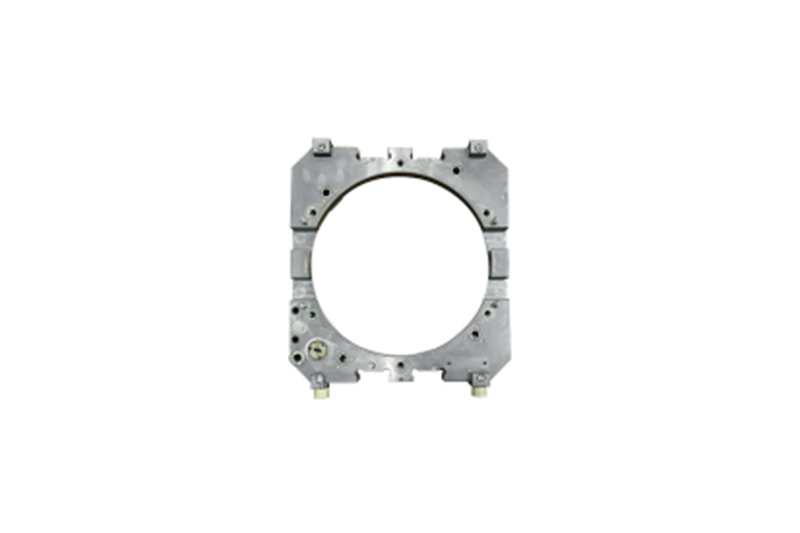
In the rapidly evolving landscape of precision manufacturing, ceramic CNC machining has emerged as a pivotal technology, driving advancements across multiple high-tech sectors. Since its inception, this sophisticated machining process has enabled manufacturers to achieve unparalleled accuracy and quality in producing complex ceramic components essential for applications in optics, robotics, biomedical devices, semiconductor equipment, and new energy solutions.
Established in 2004, GPM has been at the forefront of providing customized precision machining parts, module assembly, and equipment integration services. With a strong focus on precision instruments and cutting-edge industries such as optics, robotics, new energy, biomedical, and semiconductors, GPM leverages advanced ceramic CNC machining to meet the stringent demands of modern technology.
### Ceramic CNC Machining: A Technological Overview
Ceramic CNC machining refers to the computer numerical control machining of ceramic materials, which are known for their hardness, thermal stability, wear resistance, and electrical insulation properties. Unlike traditional machining of metals or plastics, ceramics require specialized techniques due to their brittleness and high hardness. CNC technology, combined with advanced tooling and process control, allows for precise shaping, drilling, and finishing of ceramic components with minimal defects.
This machining approach provides several critical advantages:
- **High Precision and Tolerance:** Ceramic parts can be manufactured with extremely tight dimensional tolerances, often within microns, making them essential for precision instruments.
- **Complex Geometries:** CNC machining enables the production of intricate shapes and fine details that are otherwise difficult to achieve.
- **Material Integrity:** Controlled machining processes reduce the risk of micro-cracks and structural weaknesses, maintaining ceramic strength and durability.
- **Repeatability and Efficiency:** CNC programming ensures consistent quality across large production runs, supporting scalable manufacturing.
### Broad Industry Applications Driving Demand
The unique properties of ceramics, combined with the precision of CNC machining, have expanded their applicability across a myriad of industries where performance and reliability are paramount.
#### Optics and Photonics
Ceramics play a crucial role in optical instruments, providing components such as lens holders, substrates, and waveguide elements that require high dimensional accuracy and thermal stability. Ceramic CNC machining allows for the creation of parts that maintain optical alignment under extreme conditions, enhancing the performance of cameras, microscopes, and laser systems.
#### Robotics and Automation
In robotics, ceramic components are employed for their wear resistance and electrical insulation. Precision-machined ceramic parts are used in sensors, actuators, and structural elements, ensuring durability and reliability in automated and robotic systems. The high precision enabled by ceramic CNC machining supports miniaturization and the development of complex robotic mechanisms.
#### New Energy Technologies
Emerging energy sectors, including battery technologies and fuel cells, use ceramics for their thermal and chemical resistance. Ceramic CNC machining helps produce components such as solid oxide fuel cell parts and battery separators with exacting specifications needed for optimal energy efficiency and safety.
#### Biomedical Devices
The biomedical industry demands biocompatible materials that are stable, inert, and manufactured to exacting standards. Precision ceramic parts are employed in implants, surgical instruments, and diagnostic equipment. The precision machining of ceramics contributes to improved patient outcomes by enabling reliable, custom-fitted medical devices.
#### Semiconductor Manufacturing
Semiconductor equipment requires components that withstand high temperatures and corrosive environments. Ceramics are used in wafer handling, insulators, and protective housings. Through advanced CNC machining, manufacturers can deliver ceramic parts that meet the stringent cleanliness and precision requirements of semiconductor fabrication processes.
### GPM’s Commitment to Excellence in Precision Machining
With nearly two decades of experience, GPM brings deep industry expertise and a commitment to innovation in precision machining. Since 2004, the company has specialized in delivering tailored solutions that meet the exact requirements of its clients across optics, robotics, new energy, biomedical, and semiconductor fields.
GPM’s approach integrates CNC machining technologies with module assembly and equipment integration, ensuring comprehensive support throughout the product lifecycle. The company harnesses state-of-the-art ceramic CNC machining techniques to produce components that meet high standards for dimensional accuracy, surface finish, and functional performance.
Customer-centric customization distinguishes GPM’s service model. Whether developing prototype components for emerging applications or supplying high-volume production parts, GPM collaborates closely with clients to optimize designs for manufacturability and cost-efficiency while maintaining uncompromising quality.
### Future Outlook: Innovation and Sustainability
As industries continue to demand higher performance and miniaturization, ceramic CNC machining is expected to play an increasingly vital role. Advances in cutting tools, machine control systems, and process monitoring are set to further enhance machining capabilities, reducing lead times and expanding the complexity of ceramic parts that can be fabricated.
Moreover, ceramics' inherent sustainability—durability, resistance to harsh environments, and compatibility with renewable energy technologies—positions ceramic CNC machining as a contributor to greener, more efficient manufacturing.
GPM remains dedicated to staying at the cutting edge of this evolving technology landscape. By integrating new machining methods with its core competencies in custom precision manufacturing and equipment integration, GPM is well positioned to support the next generation of high-tech manufacturing solutions.
### Conclusion
Ceramic CNC machining stands as a critical enabler of precision manufacturing within advanced technologies. Through high precision, repeatability, and the ability to handle complex geometries, it addresses the specialized needs of industries ranging from optics to semiconductor manufacturing. GPM’s long-standing expertise and dedication to customized precision machining ensure that clients receive high-quality ceramic components and integrated solutions, driving innovation and performance in their respective fields.
As the industry evolves, the synergy between advanced ceramic machining and precision manufacturing will continue to unlock new possibilities, ensuring that high-performance ceramic components remain foundational to the technologies shaping the future.