
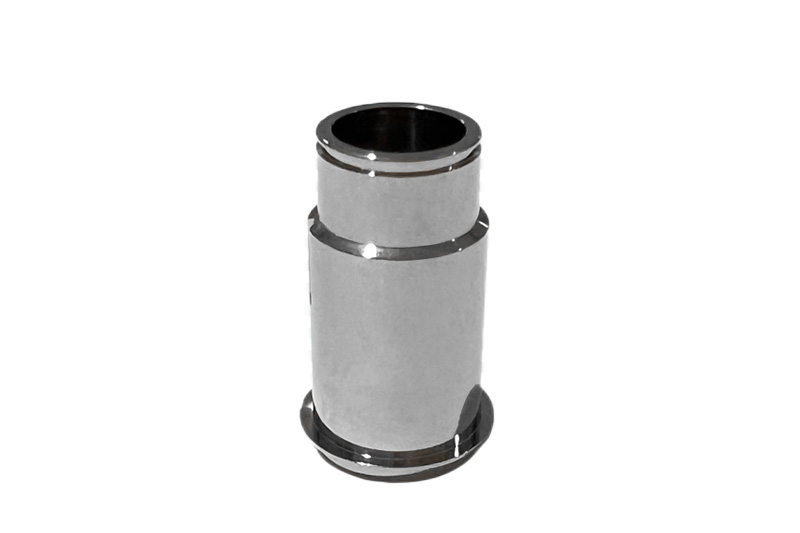
Metal casting remains a cornerstone in manufacturing, enabling the creation of complex parts with high precision and efficiency. Over the years, several metal casting processes have emerged, each suited to different applications and industries. This article delves into some of the most widely adopted metal casting processes today and highlights how companies specialized in precision machining and assembly leverage these techniques to support cutting-edge sectors such as optics, robotics, new energy, biomedical, and semiconductors.
### Overview of Metal Casting Processes
Metal casting involves pouring molten metal into a mold to achieve the desired shape after solidification. It is particularly valuable for producing components that are difficult to fabricate through other methods like machining or forming. The selection of casting process depends on factors such as material type, desired surface finish, dimensional accuracy, production volume, and cost.
Here are some of the most influential metal casting processes widely used in modern manufacturing:
#### 1. Sand Casting
One of the oldest and most versatile casting methods, sand casting uses sand-based molds that are inexpensive and easy to produce. It is ideal for creating large components or small production runs. Though the surface finish and tolerances are relatively rough compared to other methods, sand casting is favored for its flexibility with different metals and complex geometries.
#### 2. Investment Casting
Also known as lost-wax casting, investment casting produces parts with excellent surface finish, close dimensional tolerances, and intricate details. It involves creating a wax pattern coated with ceramic material to form a mold. Once the wax is melted away, molten metal is poured into the cavity. This process is widely used in aerospace, biomedical, and precision instruments where component performance is critical.
#### 3. Die Casting
Die casting employs high-pressure injection of molten metal into steel molds, enabling rapid production of parts with intricate details and smooth surfaces. It is suited for metals with low melting points such as aluminum, magnesium, and zinc. The process is ideal for high-volume manufacturing with consistent quality, commonly applied in automotive, electronics, and robotics industries.
#### 4. Shell Molding
Shell molding is a variation of sand casting where a resin-coated sand mold is created with a thin, hard shell. This process offers better dimensional accuracy and surface finish compared to traditional sand casting. The molds are also reusable depending on resin type. Shell molding finds application in precision components requiring moderate production scale and quality.
#### 5. Centrifugal Casting
In centrifugal casting, molten metal is poured into a rotating mold, which forces the metal against the mold walls using centrifugal force. This method results in refined microstructures, less porosity, and good mechanical properties. It is often preferred for cylindrical parts like pipes, bearings, and rings used in machinery and new energy sectors.
### Integration of Metal Casting with Precision Machining and Assembly
While casting provides the near-net shape of components, final dimensional accuracy and functionality often require precision machining and assembly processes. Companies dedicated to customized precision machining bridge this gap, transforming cast parts into high-performance modules.
Established in 2004, GPM is a leading provider specializing in customized precision machining parts, module assembly, and equipment integration services. By combining advanced metal casting techniques with state-of-the-art machining capabilities, the company delivers tailor-made components that meet the stringent demands of various high-tech industries.
### Industry Applications Leveraging Metal Casting and Precision Components
#### Optics and Precision Instruments
Optical equipment demands components with ultra-precise dimensions and smooth finishes. Investment casting and shell molding, complemented by precision machining, play a pivotal role in fabricating stable, lightweight, and accurate parts used in cameras, microscopes, and laser systems.
#### Robotics and Automation
Robotics components are subjected to diverse stresses and require complex geometries. Die casting and centrifugal casting provide robust structural parts, while machining fine-tunes mobility and assembly interfaces. The synergy of casting and machining ensures durability and performance in robotic arms, actuators, and sensors.
#### New Energy Solutions
With the global shift towards renewable energy, metal casting supports manufacturing turbine components, battery housings, and heat exchangers. Centrifugal and sand casting produce parts capable of withstanding high stress and temperature variations. Precision finishing guarantees optimal integration into energy conversion devices.
#### Biomedical Devices
Biomedical implants and instrumentation often require biocompatible metals shaped with exceptional accuracy. Investment casting combined with precision machining allows fabrication of complex implant geometries with smooth surfaces to meet safety and functionality standards.
#### Semiconductor Industry
Semiconductor manufacturing equipment involves parts that demand tight tolerances and contamination-free surfaces. Through investment casting and shell molding, manufacturers obtain the base components, followed by ultra-precision machining to achieve the final specifications essential for semiconductor fabrication.
### Conclusion
The evolution of metal casting processes continues to empower various high-tech manufacturing sectors. By selecting the appropriate casting method and integrating advanced precision machining and assembly services, companies can produce sophisticated components that meet the ever-increasing standards for quality, performance, and reliability.
Since its inception in 2004, GPM has exemplified this integrated approach by delivering customized precision machining parts and module assembly solutions to critical industries including optics, robotics, new energy, biomedical, and semiconductor. The company's commitment to precision and innovation underscores the vital role metal casting and machining play in shaping the future of manufacturing.
As industries continue to push the boundaries of technology, the partnership between casting technologies and precision machining will remain fundamental to fostering innovation and delivering high-quality products worldwide.