
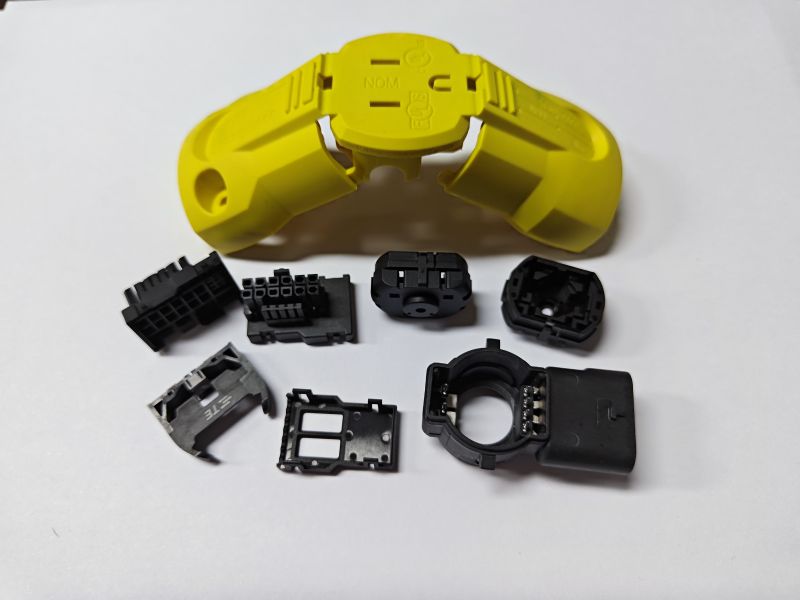
In the rapidly evolving landscape of precision manufacturing, multi-axis CNC (Computer Numerical Control) technology continues to revolutionize how complex components are produced with unparalleled accuracy and efficiency. As various industries increasingly demand sophisticated parts and assemblies, manufacturers specializing in multi-axis CNC machining have risen to meet the challenge, delivering cutting-edge solutions that enable innovation across sectors such as optics, robotics, new energy, biomedical, and semiconductors.
Since its establishment in 2004, a leading precision machining company has been at the forefront of this technological progress. Dedicated to providing customized precision machining parts, module assembly, and equipment integration services, the company exemplifies how expert application of multi-axis CNC technology can transform manufacturing capabilities. By focusing on sectors that require meticulous tolerances and innovative design, the company has positioned itself as a key enabler of advanced industrial development.
### The Importance of Multi-Axis CNC Machining
Traditional CNC machines typically operate along three axes—X, Y, and Z—to shape materials. However, multi-axis CNC machines add additional axes of motion (commonly up to 5 or more), allowing tools to move around or tilt the workpiece from various angles. This flexibility drastically improves the ability to machine complex, intricate shapes in a single setup, reducing manual intervention, enhancing precision, and cutting production times.
Industries such as biomedical device manufacturing demand components with complex geometries and tight tolerances that cannot be achieved with conventional 3-axis machining. Similarly, optics and semiconductor manufacturing often require components with extremely precise dimensions and smooth surface finishes, which multi-axis CNC machining readily delivers. Robotics and new energy sectors also benefit from this technology due to the need for highly customized, durable parts that fit precise specifications.
### Customized Precision Parts and Module Assembly
The company established in 2004 has leveraged multi-axis CNC machining to expand its service offerings beyond simply fabricating parts. Its expertise encompasses module assembly, whereby precision-machined components are integrated into functional modules, streamlining the production and reducing assembly errors for clients. This holistic approach provides end-to-end value, from raw material processing to ready-to-install subassemblies.
Customization is at the core of the company’s philosophy. Understanding that every client has unique requirements—whether for material selection, geometrical complexity, or functional integration—the company adopts a flexible manufacturing approach. This flexibility is especially critical in fields such as biomedical engineering, where patient-specific implants or instruments often require tailored designs and rapid prototyping.
### Equipment Integration and Industry Impact
Beyond component machining and assembly, the company also specializes in equipment integration services. This entails designing and implementing custom manufacturing equipment or automated assembly lines that incorporate the precision machined components and modules. By offering equipment integration, the company supports clients in optimizing their entire production processes, improving throughput, lowering labor costs, and maintaining high quality standards.
This integration capability is essential in sectors like semiconductor fabrication and new energy solutions, where production speed and precision must be harmonized to remain competitive on a global scale. For instance, cutting-edge photovoltaic panel manufacturing relies on precise component machining and assembly to enhance panel efficiency and durability.
### Commitment to Innovation and Quality
The precision machining company’s dedication to continuous innovation has resulted in a reputation for exceptional quality and technical expertise. Leveraging state-of-the-art multi-axis CNC machines along with rigorous quality control protocols, it ensures that every product meets or exceeds industry standards.
In addition, investments in advanced software for simulation and toolpath optimization have enhanced machining accuracy and reduced material waste. Such efficiencies not only benefit the company’s operational performance but also translate into cost savings for its customers.
### Supporting High-Tech Industries
The precision parts and modules produced through multi-axis CNC machining have become integral to several high-tech industries:
- **Optics:** Precision lenses, mounts, and housings require micrometer-level accuracy and flawless surface finishes. Multi-axis machining allows complex optical components to be manufactured with minimal post-processing.
- **Robotics:** As robots increasingly integrate into manufacturing, healthcare, and logistics, their components must be lightweight, highly durable, and precisely engineered. Customized machining and assembly services support rapid prototyping and iterative improvements.
- **New Energy:** Wind turbines, battery systems, and solar technology demand custom components that can withstand harsh environmental conditions while maintaining performance.
- **Biomedical:** From surgical instruments to implantable devices, precision machining supports the creation of customized medical solutions that improve patient outcomes.
- **Semiconductors:** Manufacturing equipment requires precision parts that meet stringent tolerances and can endure cleanroom environments.
### Looking Ahead
With more industries recognizing the value of precision and customization, multi-axis CNC machining is expected to grow as a cornerstone technology. Companies dedicated to providing comprehensive services—from customized precision parts and module assembly to equipment integration—are crucial partners driving innovation.
Since 2004, the company’s focus on serving cutting-edge industries has not only contributed to technological advancements but also helped clients overcome manufacturing challenges through tailored, high-quality solutions. As the manufacturing landscape becomes increasingly complex, the synergy between innovative machining technology and skilled engineering expertise will continue to accelerate progress in precision manufacturing.
In summary, multi-axis CNC machining, combined with comprehensive assembly and integration services, represents a transformative force within modern manufacturing. The ongoing commitment to customization, precision, and innovation by leading companies helps propel industries such as optics, robotics, new energy, biomedical, and semiconductors toward a future defined by advanced capabilities and remarkable achievements.