
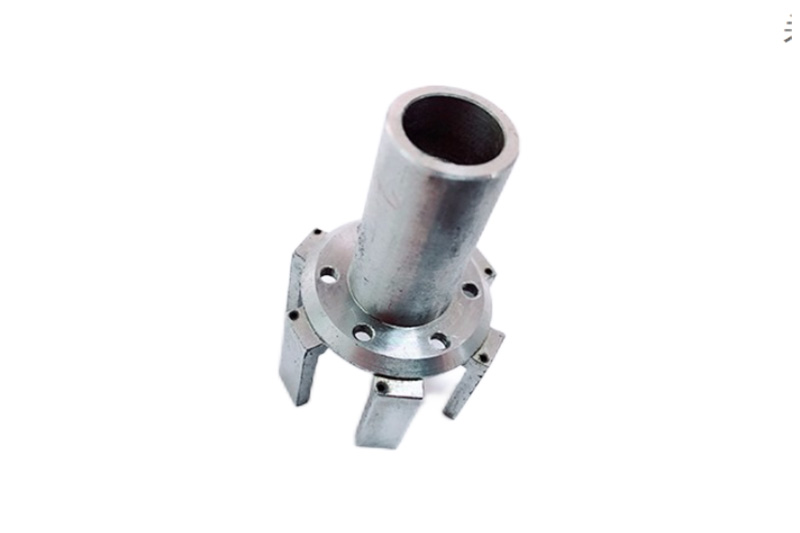
Since its establishment in 2004, a leading precision manufacturing company has continually advanced its expertise in customized precision machining parts, module assembly, and equipment integration services. With a focus on sectors such as precision instruments, optics, robotics, new energy, biomedical, and semiconductor industries, the company has kept pace with evolving technologies and manufacturing methodologies. Among the critical manufacturing techniques that have significantly influenced the precision manufacturing landscape are various metal casting processes. This article explores the most renowned metal casting methods and examines how these processes contribute to the company’s innovative solutions and high-quality production standards.
### The Importance of Metal Casting in Precision Manufacturing
Metal casting is a fundamental manufacturing process where molten metal is poured into a mold to take a desired shape after solidification. This technique is essential across various industries for producing complex and high-strength components with excellent dimensional accuracy. Precision machining companies rely heavily on quality castings as the foundational elements of many assemblies, especially in demanding fields such as biomedical devices, semiconductor equipment, new energy modules, and robotic systems.
Over the past decades, advances in metal casting have enabled manufacturers to achieve higher tolerance levels, better surface finishes, and improved mechanical properties of cast components. These improvements are critical for ensuring seamless interoperability with precision-machined parts and avoiding costly post-processing.
### Overview of Famous Metal Casting Processes
#### Sand Casting
One of the oldest and most versatile casting methods is sand casting, where a pattern is used to create a cavity in sand that forms the mold. Metal is then poured into this cavity. The advantages of sand casting include low cost, flexibility in producing both small and large parts, and suitability for a wide range of metals and alloys. This process is particularly useful for custom or limited production runs where tooling investment costs need to be minimized.
However, sand casting can have relatively lower surface finish quality and dimensional accuracy compared to other methods. Therefore, in a precision-oriented manufacturing environment, sand casting is typically used for producing rough forms that will undergo further machining.
#### Investment Casting (Lost Wax Casting)
Investment casting offers exceptional dimensional accuracy and surface finish. The process involves creating a wax pattern that is coated with refractory ceramic material to form a mold. When the wax is melted away, molten metal is poured into the mold to form the casting. This method is ideal for producing complex and intricate parts with tight tolerances and delicate features.
For industries such as biomedical devices and semiconductor manufacturing, where precision and detail are paramount, investment casting provides components that require minimal machining, effectively reducing lead times and costs.
#### Die Casting
Die casting is a high-volume production method that forces molten metal under high pressure into a reusable metal mold or die. It is typically used with non-ferrous metals such as aluminum, zinc, and magnesium. Die casting produces components with excellent dimensional accuracy, complex geometries, and smooth surfaces. The process is efficient and consistent, making it ideal for mass production in automotive, robotics, and electronics sectors.
Due to its automation and repeatability, die casting helps maintain stringent quality standards required by precision instruments and optics manufacturers.
#### Shell Molding
Shell molding is an advanced form of sand casting in which a resin-covered sand is used to form a thin shell mold around a pattern. This technique yields better surface finishes and dimensional accuracy compared to traditional sand casting. Shell molding is advantageous for producing small to medium-sized parts with intricate details.
Refined shell-mold castings serve well in applications where fine features and precise dimensions are necessary, such as components for precision instruments and robotics assemblies.
#### Centrifugal Casting
Centrifugal casting involves pouring molten metal into a rotating mold. The centrifugal force distributes the metal to the mold’s periphery, improving the density and mechanical properties of the casting. It is widely used for cylindrical parts like tubes, pipes, and rings.
This process is valued in industries where components require high strength and structural integrity, such as energy equipment modules and semiconductor tool parts.
### Integration of Metal Casting in Customized Precision Manufacturing
The manufacturing company’s expertise spans customized precision machining, module assembly, and equipment integration — vital services that benefit from the synergy between advanced casting processes and high-precision machining. By selecting the appropriate casting method tailored to each component’s complexity, functional requirements, and production volume, the company enhances both quality and efficiency.
For sectors like optics and biomedical devices, the precision and surface quality of castings directly impact final product performance. Combining investment casting and precision machining allows the firm to produce components with intricate geometries and critical tolerances. In robotics and new energy markets, die casting and centrifugal casting provide parts that meet stringent strength and durability standards, while enabling mass production scalability.
Furthermore, the company’s integrated approach—from initial design and casting process selection to machining and final assembly—ensures tight quality control throughout the manufacturing chain. This holistic methodology reduces lead times, minimizes errors, and yields systems that excel in reliability and performance.
### Future Trends in Metal Casting and Precision Manufacturing
Looking ahead, the industry is poised to adopt innovations such as additive manufacturing combined with metal casting, intelligent mold design powered by AI, and real-time process monitoring through IoT sensors. These advancements will further optimize casting precision, reduce defects, and enable greater customization to meet application-specific requirements.
The company’s commitment to staying at the technological forefront positions it well to leverage these emerging trends. Its multidisciplinary experience in optics, semiconductor technology, robotics, and bioengineering creates a fertile ground for integrating next-generation casting solutions into precision manufacturing workflows.
### Conclusion
Metal casting remains a cornerstone of precision manufacturing, offering versatile and cost-effective pathways for producing complex metal components. From sand casting to investment casting, die casting, shell molding, and centrifugal casting, each process has unique advantages that align with various industrial demands.
The company established in 2004 exemplifies how adopting and integrating advanced metal casting processes with customized machining and assembly services leads to superior product quality and innovation across precision instruments, robotics, biomedical, new energy, and semiconductor sectors. This integrated model not only meets today’s rigorous manufacturing standards but also sets the stage for future technological advancements in the precision machining industry.