
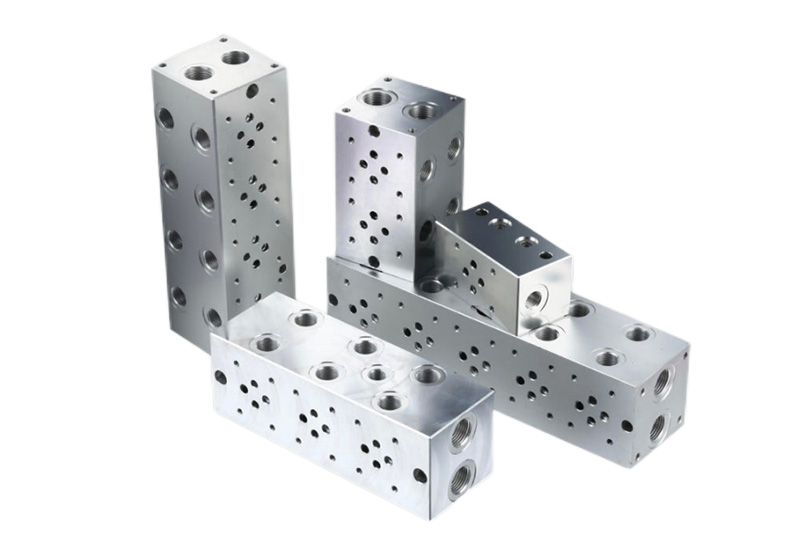
In the rapidly evolving landscape of modern manufacturing, advancements in CNC (Computer Numerical Control) machine technology are playing a pivotal role in meeting the growing demand for precision, efficiency, and customization. Since its establishment in 2004, a leading precision machining company has been at the forefront of this transformation, providing bespoke machining parts, module assembly, and equipment integration services to a variety of high-tech sectors including precision instruments, optics, robotics, new energy, biomedical, and semiconductors.
### Precision Machining: The Backbone of Modern Industry
Precision machining has long been recognized as the backbone of manufacturing industries where accuracy and reliability are non-negotiable. CNC machines facilitate this by automating the control of machining tools based on digital design data, enabling complex parts to be produced with consistent quality and tight tolerances.
The company, with nearly two decades of experience, leverages state-of-the-art CNC technology to cater to the unique needs of its diverse clientele. From crafting minute components for biomedical devices to fabricating robust modules for new energy applications, their expertise in precision machining ensures that every part meets stringent quality standards.
### Tailoring Solutions Through Customized Services
One of the core strengths of the company lies in its ability to provide customized precision machining services. Unlike mass production models, customized machining involves producing parts tailored exactly to the specifications and functional requirements of a particular project or product design.
This capability is vital in sectors like robotics and semiconductor manufacturing where component complexity is high, and the margin for error is virtually nonexistent. By integrating CNC machining with comprehensive module assembly and equipment integration services, the company offers a seamless solution that reduces lead times and streamlines the production process.
### Innovations Driving CNC Machining Forward
Recent technological innovations are pushing the boundaries of CNC machining, enabling even greater efficiency and versatility. Multi-axis machining centers, real-time adaptive control, and advanced simulation software have enhanced the ability to produce intricate geometries and complex assemblies.
For example, the integration of multi-axis machines allows simultaneous movements along several axes, providing the freedom to create parts with complex contours and undercuts in fewer setups. This not only improves precision but also dramatically reduces production time and costs.
Moreover, real-time monitoring and adaptive controls minimize tool wear and detect anomalies early, ensuring consistent quality and reducing waste. Combined with sophisticated software, these technological advances enable precise machining of hard-to-machine materials commonly used in biomedical implants and semiconductor manufacturing.
### Meeting the Challenges of High-Tech Industries
Each industry served by the company presents unique challenges that CNC machining is well-positioned to solve. In the optics industry, where components often feature delicate shapes and superior surface finish requirements, CNC machining allows the production of lenses, mounts, and housings that maintain optical integrity and alignment.
In robotics, parts must meet exacting dimensional tolerances while maintaining structural strength. The company’s precision machining and assembly services enable the fabrication of end-effectors, actuators, and chassis components that fulfill these demanding criteria.
New energy technologies, such as battery systems and solar power equipment, require components with precise dimensions and tight assembly tolerances to optimize performance and safety. Similarly, biomedical applications demand biocompatible materials machined with exceptional accuracy for implants, surgical tools, and diagnostic devices.
Semiconductor manufacturing components must support ultra-clean environments and precise mechanical operations. Precision machining ensures parts like wafer holders, vacuum chambers, and alignment fixtures meet these stringent standards.
### Commitment to Quality and Continuous Improvement
At the core of the company’s success is an unwavering commitment to quality and continual improvement. Utilizing advanced quality control systems including coordinate measuring machines (CMM), in-process inspection, and traceability solutions, every machining process is closely monitored.
The company invests continuously in upgrading its CNC equipment and training skilled personnel, ensuring that it remains competitive in an industry characterized by rapid technological change. Its integrated approach to machining, assembly, and equipment integration provides clients with a reliable partner capable of delivering complex projects from concept to completion.
### Looking Ahead: The Future of CNC Machining
As industrial demands evolve, CNC machining will continue to adapt and expand its capabilities. Emerging technologies such as additive manufacturing integrated with CNC machining, artificial intelligence-driven process optimization, and enhanced digital twin simulations promise to revolutionize precision manufacturing further.
The company remains dedicated to harnessing these innovations to support its clients across precision instruments, optics, robotics, new energy, biomedical, and semiconductor fields. By doing so, it solidifies its role as a trusted provider of customized precision machining solutions that meet the highest standards of performance and reliability.
### Conclusion
The advances in CNC machine technology have transformed precision manufacturing, enabling the production of increasingly complex and high-quality components. Since 2004, the company has leveraged these technologies to provide tailored machining, assembly, and integration services, empowering industries that require exacting standards.
As technology continues to evolve, the synergy between advanced CNC machining and the diverse requirements of cutting-edge sectors promises to drive innovation and efficiency, ensuring that precision manufacturing remains a key enabler of modern industrial progress.