
In recent years, the aerospace industry has witnessed significant advancements in manufacturing technologies, particularly in the realm of CNC (Computer Numerical Control) machining of aircraft parts. As the demand for higher precision, reliability, and efficiency continues to rise, companies specializing in customized precision machining have taken center stage, offering innovative solutions to meet the stringent requirements of aerospace components.
Established in 2004, a leading precision machining company has been dedicated to providing customized CNC machining parts, module assembly, and equipment integration services. With a primary focus on precision instruments, optics, robotics, new energy, biomedical, and semiconductor sectors, this company has gradually expanded its expertise to include the aerospace industry, delivering high-quality machined components essential for modern aircraft.
### The Growing Importance of CNC Machining in Aerospace
Aircraft parts demand exceptional precision due to the critical nature of aviation safety and performance. Traditional manufacturing methods often fall short in meeting the tight tolerances and complex geometries required for aerospace components. CNC machining, with its computer-controlled accuracy and repeatability, has become indispensable in producing parts such as turbine blades, engine mounts, structural components, and intricate internal mechanisms.
By integrating advanced CNC machining centers, aerospace manufacturers can achieve complex shapes with minimal errors while ensuring material integrity and longevity. The adoption of multi-axis CNC machines allows for simultaneous machining of multiple surfaces, significantly reducing production time and improving cost-efficiency.
### Customized Precision Machining: Meeting the Unique Needs of Aerospace
The company established in 2004 stands out due to its commitment to customization and precision. Aerospace clients often demand tailor-made solutions to fit unique aircraft designs or enhancements. To cater to these needs, the company employs a team of skilled engineers and machinists who collaborate closely with clients to understand specifications, material requirements, and performance criteria.
Their precision machining capabilities encompass milling, turning, grinding, and drilling of aerospace-grade materials such as titanium, aluminum alloys, and high-strength composites. The company also leverages advanced CAD/CAM software to simulate and optimize machining paths, ensuring precise outcomes while minimizing material waste.
### Module Assembly and Equipment Integration for Streamlined Production
Beyond machining individual parts, the company provides module assembly services that integrate multiple components into functional modules. This approach facilitates easier installation and maintenance for aircraft manufacturers and operators. By assembling modules in-house, the company ensures tight quality control and adherence to aerospace standards.
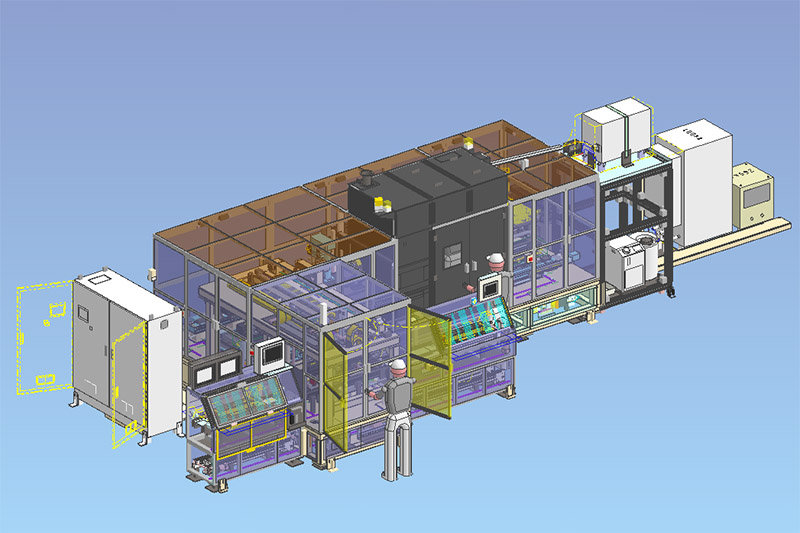
Equipment integration services further enhance manufacturing efficiency. By combining machining capabilities with automation and robotics, the company creates advanced production lines that can handle complex assembly tasks with high consistency. This not only accelerates production cycles but also reduces human error, elevating overall product reliability.
### Commitment to Quality and Industry Standards
Working within the aerospace sector demands rigorous compliance with international quality standards such as AS9100 and ISO 9001. The company has implemented comprehensive quality management systems that govern every phase of production, from raw material inspection to final product testing.
Non-destructive testing methods, precision measurement instruments, and traceability systems are employed to guarantee that every machined part meets or exceeds customer and regulatory requirements. This unwavering dedication to quality has enabled the company to build a trusted reputation among aerospace clients worldwide.
### Diversification Across High-Tech Industries
While the aerospace sector remains a key focus, the company's expertise extends to other high-tech industries requiring precision machining. Their work in optics involves fabricating components for scientific instruments and imaging devices. In robotics, they manufacture parts that demand fine tolerances and durability. The company's involvement in new energy, biomedical, and semiconductor fields highlights its versatility and technological prowess.
This broad industrial exposure fosters continual innovation and knowledge transfer, enabling the company to stay ahead of technological trends and integrate cutting-edge methods into its aerospace projects.
### Future Prospects and Innovations
Looking ahead, the integration of CNC machining with additive manufacturing and smart factory concepts presents exciting opportunities. Combining 3D printing with conventional machining can optimize material usage and produce hybrid components with enhanced performance.
Moreover, the application of AI-driven process monitoring and predictive maintenance within CNC operations can further improve productivity and reduce downtime. The company actively explores these trends to maintain its competitive edge and deliver the highest standards of aerospace manufacturing.
### Conclusion
The evolution of CNC machining technology has profoundly impacted the aerospace industry, enabling the production of complex, high-precision aircraft parts critical for safety and performance. Since its establishment in 2004, the featured precision machining company has been at the forefront of this transformation, offering customized machining, module assembly, and equipment integration services tailored to the aerospace sector’s unique demands.
Through its commitment to quality, innovation, and cross-industry expertise, the company continues to support the advancement of aerospace manufacturing, contributing to safer, more efficient, and technologically sophisticated aircraft around the world. As the aerospace landscape evolves, such precision machining providers will remain vital partners in shaping the future of flight.